


 Dec 29, 2025
 3 min read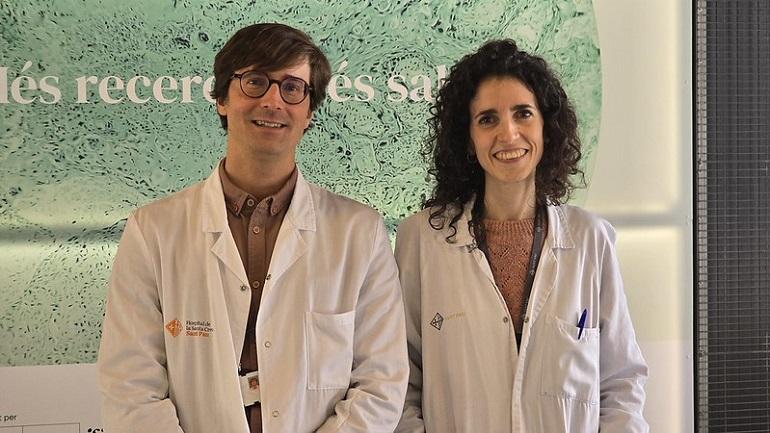
New neuropsychological references allow early identification of one in five cases of early stage Alzheimer's disease
Sant Pau Research Institute (IR Sant Pau) led a multicenter project that is redefining what is considered normal cognitive performance.The work, which was developed in collaboration with the Hospital Clinic in Barcelona, the Marqués de Valdecilla University Hospital in Santander and the CITA-Alzheimer Foundation in San Sebastián, resulted in two complementary scientific articles published in the journal Alzheimer's & Dementia: Diagnosis, Assessment & Disease Monitoring (DADM), which establishes a new cognitive reference that is not based on a specific person. amyloid pathology and demonstrates its ability to improve early disease
This initiative comes at a key moment in clinical practice.The creation of disease-modifying treatments requires more accurate identification of patients at very early stages, when interventions are most effective and safe.
The project addresses this need by redefining cognitive performance with state-of-the-art tools and data from carefully selected populations, allowing for a more accurate demarcation between healthy aging and actual deterioration.
New references based on people without amyloid pathology
En la primera parte del proyecto se desarrollaron por primera vez referencias neuropsicológicas basadas exclusivamente en personas sin biomarcadores de enfermedad de Alzheimer y utilizando modelos estadísticos avanzados, teniendo en cuenta la edad, el nivel educativo y el sexo.
This combination, hitherto only partially applied in a few selected tests, has for the first time been used simultaneously in a broad battery of neuropsychological tests, representing a relevant methodological advance on an international scale.
This approach allows us to better define what constitutes true normal cognitive performance in aging.By excluding individuals with preclinical amyloid who are still asymptomatic, we avoid confounding small disease-related declines with healthy aging.
The establishment of the new evidence was based on a group of about 800 adults who are healthy and on high statistics that can explain in detail how age, education and natural sex affect each area of knowledge.This method allowed us to identify subtle but relevant differences between men and women, as well as the unmeasured effects of age and education that previous methods could not detect, which greatly increased the accuracy of the assessments.
The team also developed a clinical calculator that allows you to quickly and accurately obtain customized results and facilitates case-by-case interpretation in memory consultations.Although the tool is not intended for general use, it has been designed so that all professionals assessing patients with suspected cognitive impairment can use it as a diagnostic support and promote uniform use of the new reference values in clinical practice.
As Dr. Sara Rubio Guerra, a researcher in the Dementia Neurobiology Group, a neurologist at the Sant Pau Memory Unit, and lead author of the study, explained, "An important part of the diagnosis is clearly defining what we consider cognitive normality.
If these instructions are not clear, we can look at the first amendment or, on the contrary, we can cause a surprise to healthy people."This new model allows us to better define the difference between healthy aging and the early change associated with disease."
New criteria allow early detection of cognitive impairment
In the second part of the study, an analysis of a sample of more than 2,400 people without dementia was carried out, showing that the application of these new references significantly improves the ability to detect very mild cognitive changes.
The new references allow us to pre-identify five cases of early cognitive impairment that did not occur before.
The data confirm that this group does not represent the cognitive variability inherent in aging.These people show higher rates of Alzheimer's biomarkers and faster cognitive progress in longitudinal analyses, indicating that they are indeed in the early stages of the disease.Detecting them earlier allows us to more accurately guide the diagnostic workup and decide when it is necessary to extend the evaluation with biomarkers.
In contrast, the number of people classified as altered by the new standards without biological evidence of disease is very small, about 3%, and in most cases biomarkers are negative.This minimizes the risk of overdiagnosis and healthy people are not exposed to unnecessary examinations.
Early diagnosis in an era of improved treatment
Dr. Ignacio Illan-Gala, researcher in the Dementia Neurobiology Group at IR Sant Pau, neurologist at the Memory Unit of Sant Pau and lead author of the work, "early treatment is the key to the era of new treatments for diseases.
Neuropsychologist shows that neuropsychology acts as a "diagnostic gateway", especially when the memory emotions are very subtle and the decision to ask for psychologists is necessary to know exactly if it is a real disorder."With more accurate reference values we can know who needs to extend the diagnosis and who can be confirmed, avoiding both diagnosis and loss of treatment opportunities," he added.
With this, the project combines the leadership of IR Sant Pau in the development of biological markers and precise tools, and establishes the basis for future improvements as markers of other neurodegenerative diseases are identified in earlier stages.
Reference articles:
Rubio-Warer Sánchez-Juan P, Balas mei GAMLSS.2025;17.https://www.
Rubio-Wummer S, Room I, Sanchez-Saudinós Sánchez-Juan P, Balas Therapies.2025;17.https://www.
We remember that SALUD A DIARIO is a media that distributes general information related to different areas of public health, so we do not answer specific questions about certain medical or treatment cases.The information we publish does not replace the information, diagnosis and/or treatment or recommendations that a health professional should provide in a specific health care situation.
SALUD A DIARIO reserves the right not to publish or to delete all comments that violate Spanish law or are insulting, as well as those that violate human dignity or are biased.Private contact information will not be published and comments will not contain "spam", advertising messages or links included by the author for commercial purposes.
In any case, SALUD A DIARIO is not responsible for the opinions expressed by users through the established participation channels and reserves the right to remove without prior notice the content generated in the participation spaces that it considers off-topic or inappropriate for publication.
* Required fields