

 Dec 03, 2025
 3 min read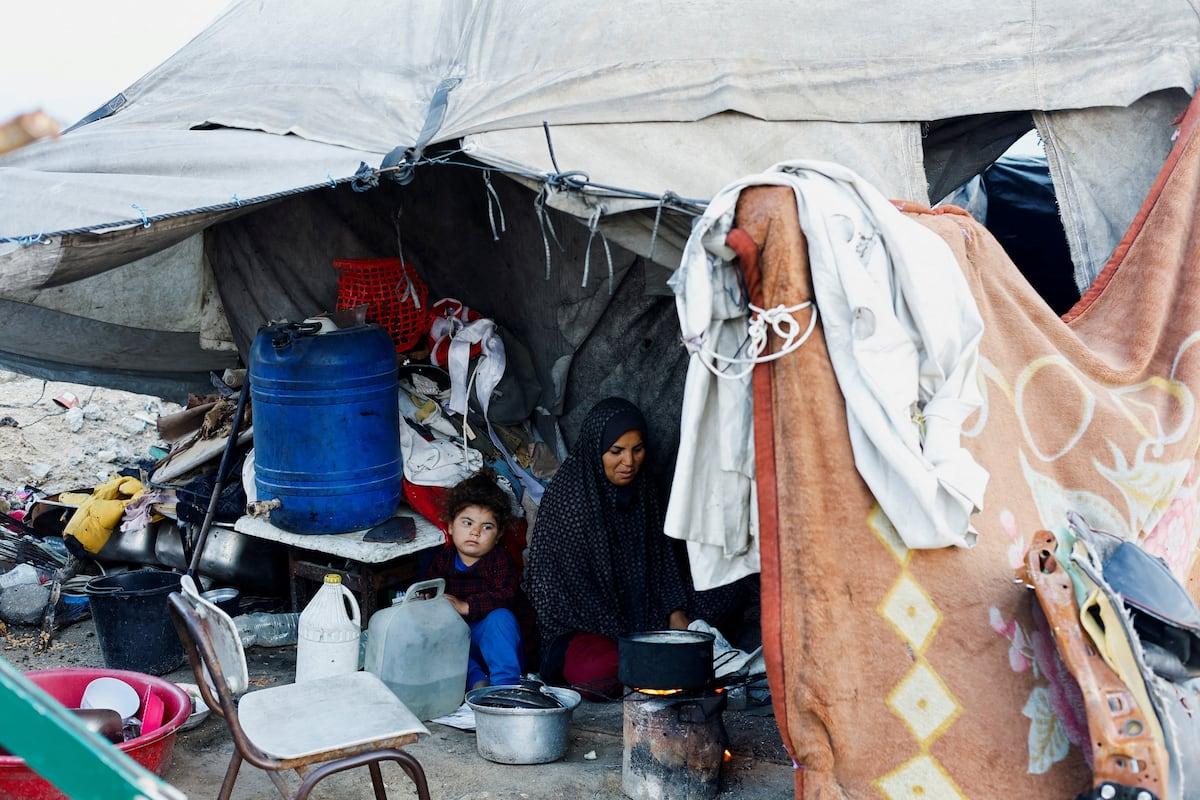
IECAH and MSF warn that the lack of funding, particularly from the US, is already having a devastating impact on the fight against malnutrition, malaria and tuberculosis and on sexual and reproductive health care in the Global South.
"Next year we will count the dead here": Funds for humanitarian aid dangerously reduced due to cuts
IECAH and MSF warn that a lack of funding, particularly from the US, is having a devastating impact on tackling malnutrition, malaria and tuberculosis, and sexual and reproductive health services in the Global South.
Needs and conflicts are increasing and the resources available to support the most vulnerable populations are set to decline by a record 10% in 2024, which will now increase by 24% in 2024, compared to 24% in 2024.Glimpse
"In the coming months, nutrition, epidemics, etc. Now we need to know that we can wake up quickly and take action in 2024-2025 - a system between cuts, a system to make legal reforms,
In 2024, the reduction in funding for humanitarian aid reached 5 billion dollars (4,284 million euros) and a total of 46.1 billion (39.5 billion euros), according to data from this research.More, as of the end of September, is more than 30%," said IECAH co-director Francisco Rey.
By the end of September, we have more data until 2025, the decrease exceeds the 30% increase of the ICAH.
This is mainly due to the cut in the US, which is responsible for 43% of the funds dedicated to development assistance by the US government, but not only 43% of the dismantled funds.Written in 2024, institutions from the United States, the European Union (EU), Germany, and the United Kingdom accounted for 65 percent.Of these four donors, only the European Union will keep its humanitarian and development budgets stable until 2027.
"The reason is his, the main anti-democrat Donald Trump.We have what he considers UN or international humanitarian law.He is destroying this international order because he is leading us to the law of the jungle," said the Joint Director of the EAEU.
Now we can raise together, to make the health crises more serious, we need to respond quickly Raquel Ayora, Director General of MSF.
Death from malnutrition or malaria
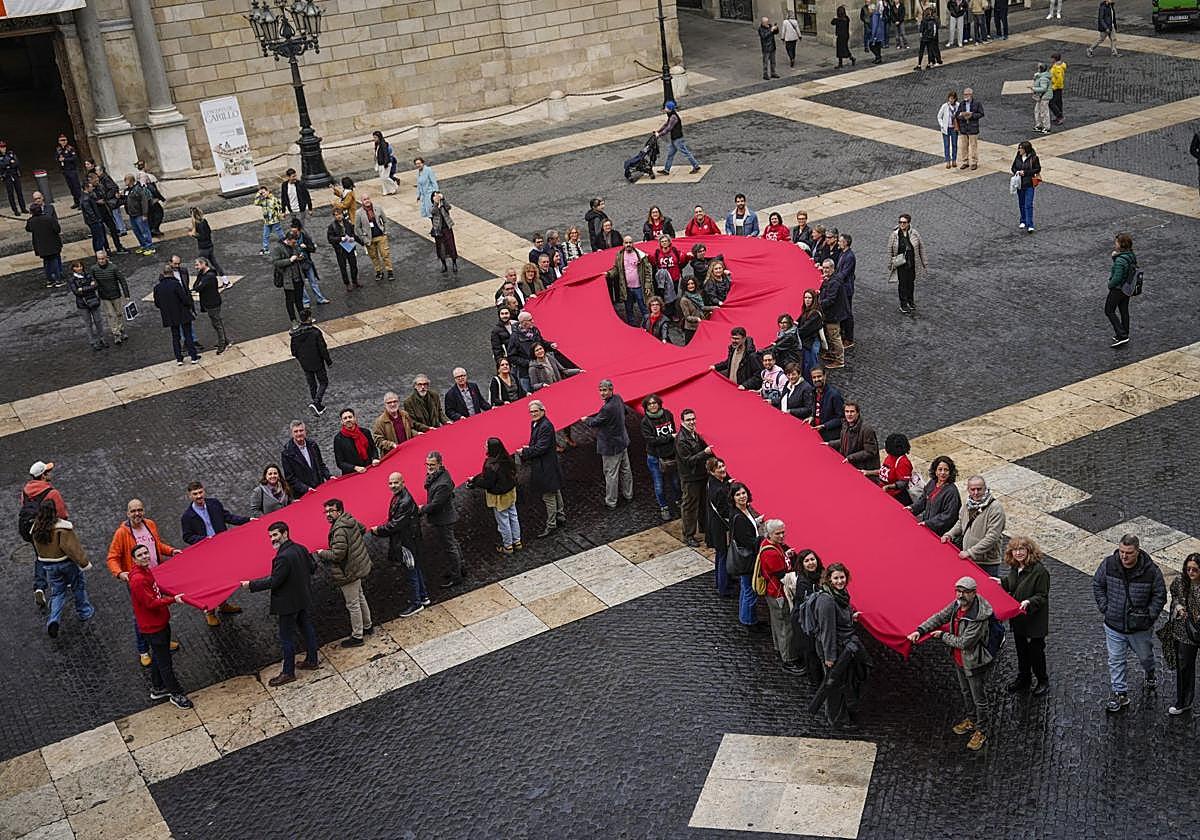
According to the report, basic programs for the prevention and treatment of malaria, HIV, tuberculosis or malnutrition, and sexual and reproductive health services are already severely affected.
In Somalia, for example, a lack of funding has forced the closure of dozens of health facilities, and deaths from malnutrition or malaria have already begun, a disease expected to cause nearly 600,000 deaths worldwide by 2023.
"In the Democratic Republic of the Congo, austerity removed part of the care for survivors of sexual violence, and at the same time, due to the escalation of the conflict, violence against women increased dramatically. The two situations were similar," quoted Ayora, an MSF Spain employee.
"Our goal for the Trump administration is to see how important it is that we do what we do, and that's what we're going to focus on, 'Aviation Plus.'
The report's authors suggest that the response to these cuts was a so-called 'humanitarian reset', that is:
At the beginning of October 2025, only 21.1% of the humanitarian appeal of the United Nations was covered, which is equivalent to $ 9.56 billion of the $ 45.34 billion needed, while global military spending saw an unprecedented increase and stood at $ 2.72 billion at the end of 2024. there is an urgent need for legitimacy for reform.
In Spain the curve is "positive" and net official development assistance (ODA) increased by 11% in 2024 compared to the previous year and reached just over 4,000 million euros.Despite this increase, the funds are equivalent to 0.25% of GDP, a far cry from the 0.7% commitment the government is aiming for in 2030. Of this, 174 million euros were allocated to humanitarian aid, which includes withdrawal. "This is partly due to the end of the 'Ukraine effect' which caused an increase and was only partially replaced by the 'Gaza effect,'" officials said.
Gaza, Ukraine and Sudan
As of 2024, Palestine is the recipient of aid money for 2.9 billion people (51 billion more than 2023).
Judah, Gaza and Suza are again, the case of the representative "long reporting and destruction of the author.
"Ukraine has reached the limits of its power and it is a failure of military strategy, but it is a failure of military strategy, it reverses the situation", Situation, "Situation", "Situation", "Situation", Changing the situation, "Situation", Situation, "Situation moving forward", Ways of compensation, "Comment", Summary JOINED, "I JOINED", INCORPORATED, "SHARED, NO SHARES AVAILABLECOMBINED.
The conflict in Sudan between the forces of Abdul Fattah al-Burhan (SAF) and the paramilitary Rapid Support Force (RSF) has been ongoing since April 2023, and has displaced around 12 million people and the country has become the scene of the worst humanitarian crisis in decades. "And no one is interested in stopping," lamented Aiola.without precedent," he added.
According to the International Peace Index Staral Statex 2025 of the Institute of Economics and Peace, the authors of the statements that include 59 active violent conflicts are focused on some, which "shows the reduction of diplomatic efforts and stabilization."
For a hospital in Gaza, this translates into impossible decisions, such as which child should I put in the air.It's a decision we make every day.It's not management, it's Survivalruth Conde, Mysf Pediatric
Bomb the hospital
MSF officials believe that it should be put on the table that increases the attack of medical and humanitarian missions and the main price paid by local personnel."
"Years ago, the hospital bombing was a one-off," Ayora said, adding that then-President Barack Obama publicly apologized when the US attacked an MSF hospital in Kunduz, Afghanistan, killing more than 40 people.30, we ultimately accept that this is an acceptable way to fight," Ayora added.
We finally decide to argue that it is an acceptable way to look at Warraquel Ayora, director of MSF, when there is not one hospital, but 30.
Also, it is believed that the "Battle in Gaza" will be called "October 7, 2023" until October 7.
"A ceasefire is not enough. The population must have access to housing, drinking water, medicine and decent living conditions," explains Ruth Condé, an MSF pediatrician who recently returned from the Gaza Strip.
A health care provider said Israel has had essential medical equipment at the gates of Gaza for months, such as "wheelchairs, crutches or small generators," which Israel considers to be for military use.
"And for Gaza's hospitals this translates into impossible decisions, like which child to put on a mechanical ventilator. These are decisions we make every day. It's not management, it's survival," he concluded.
Your subscription is in use on another device
Want to add another user to your subscription?
If you continue to read on this device, you will not be able to read on other devices.
Your ArrowSubscription is being used on another device and you can only access EL PAÍS from one device at a time.
If you want to share your account, change your subscription to popular mode, so you can add other users.Each person will log in with their own email account, which will allow you to customize your experience in El PAís.
Do you have a business?Go here to sign up for an account.
If you do not know who is using your account, we recommend changing your password here
If you choose to continue sharing your account, this message will appear on your device and account indefinitely, affecting your reading experience.You can learn.